
Faith is the Answer
Remember the story in Mark 5 of the woman who had been hemorrhaging for 12 years? She touched Yeshua’s clothing and was not only healed, but captured the attention of Yeshua despite the throng of people crowding Him. While obviously a great account of Yeshua’s compassion and supernatural power, this story leaves me with a few questions:
- Why did the woman think if she touched Yeshua’s clothes she would be healed?
- Why did Yeshua feel the power go out from Him when she touched Him and not everyone else who was crowding around?
- And after a wonderful miracle, why was the woman fearful of Him? (more…)
Living as a Sacrifice to God
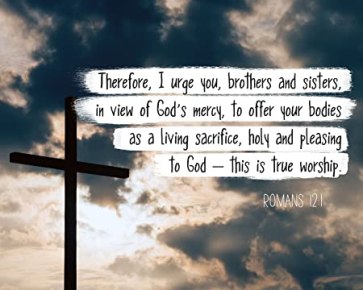 “A living sacrifice to God” (Romans 12:1). It’s a familiar term, one that’s always in the back of my mind as my position and purpose in God. Then, I unexpectedly learned a deeper understanding of what that actually means and how I can really live it out.
The idea of sacrifice to us today refers to giving something up. But the audience of Paul’s day at the time it was written would have understood it to refer to the temple sacrifices — animals, birds, oil, grains — which were a major part of their life and had been in their history for nearly 1,500 years.
One of the offerings required was a “whole burnt offering” — the Hebrew word “olah” (referred to repeatedly in Lev. 1-6). This offering was used to symbolize that the worshipper had offered himself in service and obedience to God. But what I didn’t know was that the word “olah” was also used to describe bondservants. (more…)
Humility: God’s Plan for Reconciliation
 As I was pondering Yeshua’s path to death and all that came before that, one word rang in my mind loud and clear: humility. Yet the word, as we know it, hardly does justice to what Yeshua displayed.
“But [He] made himself nothing, taking the very nature of a servant, being made in human likeness. And being found in appearance as a man, he humbled himself and became obedient to death— even death on a cross!” Philippians 2:7-8
This is God Himself in the flesh, being crucified as a criminal by those He created, in order to pay their penalty for them. That’s humility–and more, a concept for which we have no frame of reference.
What was He hoping to achieve? The answer was another astonishing realization: (more…)
A Messianic Perspective
In Leviticus and other sections of the Torah (the first five books of the Bible), we read about the myriad of offerings and sacrifices, the ceremonial cleansings, and the stipulations for coming near to a holy God. On The Day of Atonement (Yom Kippur), for example, the high priest would’ve prepared for weeks ahead of time to perform the duties prescribed for the one day — with all its garments, offerings, animals, his family and other priests involved and contingency plans in case something didn’t go as planned. Then on the actual Day of Atonement, it would probably take him all day to perform the list of duties.
Granted, The Day of Atonement was the most holy day of the year, but there were six other holy days equally as rigorous in their requirements, not to mention the daily and weekly procedures of the temple and the offerings and sacrifices brought in by the people of Israel that were also required.
In Yeshua, we see the fulfillment of all of these requirements. (more…)


 Messianic Sabbath