Tracing Yeshua’s Blood From the Cross to the Ark – Part 3
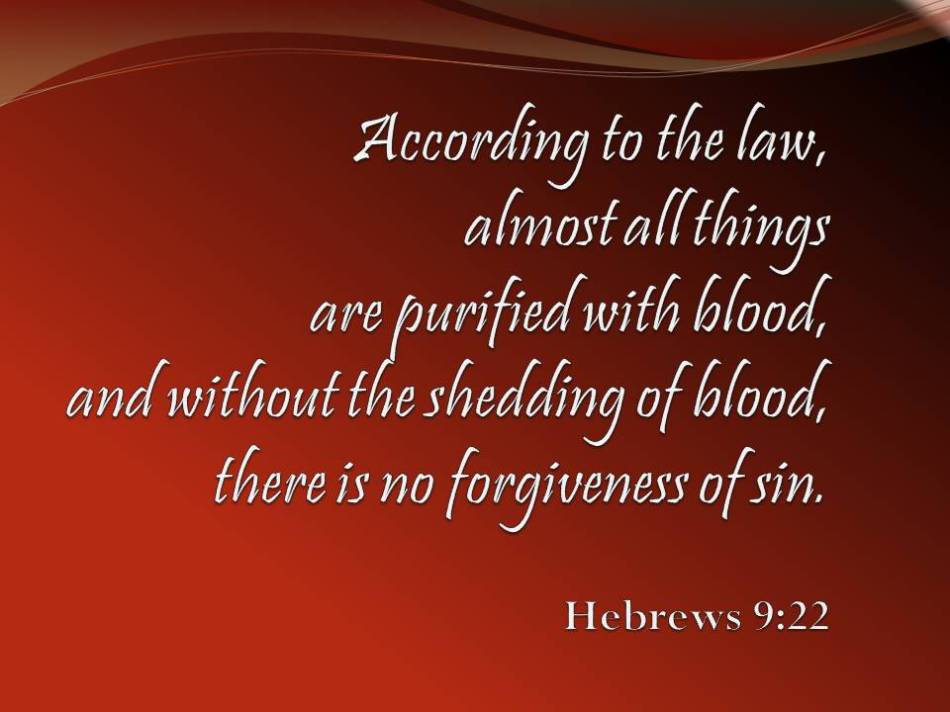
If you know YHVH even a little bit, you know he is holy and has set up all of his Torah instructions for a reason. He has and will continue to fulfill all of his own instructions until heaven and earth pass away. So we understand from the instructions for the Day of Atonement that to fulfill the law, Yeshua’s holy blood has to be put on the Ark of the Covenant in the heavenly temple.
Have you thought about when and how Yeshua’s blood shed at Passover might have been put on the ark?
In Parts 1 and 2 we reviewed these questions:
- What happens to the blood at Passover?
- Is the blood on the ark?
- How are our sins covered?
- What else is Yeshua’s blood for?
So far we’ve concluded that there is no instruction for putting the Passover lamb’s blood on the Ark of the Covenant. And, there’s nowhere in the Bible that tells us Yeshua did so when he went into the heavenly temple after his death. According to YHVH’s instruction, blood is put on the ark only on The Day of Atonement. Is that when Yeshua’s blood is put on the ark? Does he have to die again on The Day of Atonement? Does the goat’s or bull’s blood that is put on the ark on The Day of Atonement cover our sin?
In this third and final part, we will look at:
- What the goats are for on The Day of Atonement, and
- How Yeshua’s blood covers the ark and us.
God’s Grace Period
There are usually about five months between Yeshua’s resurrection in the Spring and The Day of Atonement in the Fall. The Spring Feasts were all aligned with Yeshua’s first coming. The Fall Feasts are aligned for his second coming.
The Feast of Trumpets is the very first Feast of the Fall Feasts. It’s meant to alert us to Yom Kippur, The Day of Atonement which comes ten days later. We have ten days to prepare for The Day of Atonement. That sounds ominous. Judaism has named these “The 10 Days of Awe” because at that point things are getting serious.
We know that atonement means punishment and usually blood. And in fact that’s what it means in Yeshua’s second coming as well. On The Day of Atonement everyone will have either accepted his blood as payment for their sin, or they will pay with their own blood, which is not holy enough to save them.
That’s why it’s so long between his first and second coming. At his first coming he made it possible for everyone to come to him, to learn about and accept his blood as their payment. It’s not just Jews now; it’s not just Israel now. This is the time of the banquet. Remember in Luke 14, the master of the house hosts a banquet, and he invites all the guests and they accept the invitation. But then they make excuses why they can’t come. “Yes, yes, we believe the Messiah is coming, but no, no, we don’t believe that’s him.” “The Messiah is not coming from Nazareth.” “The Messiah is not born of flesh and blood.”
And so the master then invites others from the town — the poor, the lame, the blind. But they say, “no, that’s not for me, I don’t think I’d be welcome there.” “I’m perfectly happy living just like I am.” And so he has his servants go out into the countryside and compel people to come in. He wants his banquet room full; he wants all the food he’s prepared enjoyed.
This is the time we’re in. Everyone is invited! The Master has thrown open the doors to everyone. You don’t have to be Jewish; you don’t have to bring a sacrifice anymore or go through a priest, you don’t have to go to the temple. Anyone can come straight into the banquet hall and eat their fill! He’s paid for everything, and it’s all you can eat! He wants as many as possible to come, and he’s inviting everyone now in this representative five-month period between his Son’s first and second coming. (In Hebraic thinking, the number 5 usually signifies grace – that’s this timeframe.) God’s grace is wide open, he’s calling everyone, compelling them even.
But when the very last one that’s going to come to the banquet arrives, he will shut the door. This is one of the things I love about the Father. He will do everything possible to compel people to come to him, to the point at which they will have to deliberately rebel against his invitation in order not to come to the banquet. And then they will have to pay the payment with their own blood, which will not be accepted. YHVH is absolutely just.
But he’s so righteous that it means we can have complete confidence that every single thing will be handled justly. Everything will be restored to his righteousness. We don’t have to worry that people are going to “get away with something,” or that he’s “soft on crime,” or that I need to “teach someone a lesson.” He’s got this. This is the foundation of his throne: righteousness and justice are what his authority is built on. I find that really comforting and freeing. He is extremely merciful, but in the end, righteous. That’s his character.
The Two Goats on The Day of Atonement
The Day of Atonement is the day the door to the banquet hall is closed.
On The Day of Atonement the blood of a bull and a goat are put on the ark. We see these instructions in Leviticus 16:14-16:
14 “He (Aaron) is to take some of the bull’s blood and sprinkle it with his finger on the ark-cover toward the east; and in front of the ark-cover he is to sprinkle some of the blood with his finger seven times. 15 Next, he is to slaughter the goat of the sin offering which is for the people, bring its blood inside the curtain and do with its blood as he did with the bull’s blood, sprinkling it on the ark-cover and in front of the ark-cover. 16 He will make atonement for the Holy Place because of the uncleannesses of the people of Isra’el and because of their transgressions — all their sins; and he is to do the same for the tent of meeting which is there with them right in the middle of their uncleannesses.
Verses 5-10 tell us there are actually two goats, the one sacrificed and another one that is set free:
5 “He is to take from the community of the people of Isra’el two male goats for a sin offering and one ram for a burnt offering. 6 Aharon is to present the bull for the sin offering which is for himself and make atonement for himself and his household. 7 He is to take the two goats and place them before Adonai at the entrance to the tent of meeting. 8 Then Aharon is to cast lots for the two goats, one lot for Adonai and the other for ‘Az’azel. 9 Aharon is to present the goat whose lot fell to Adonai and offer it as a sin offering. 10 But the goat whose lot fell to ‘Az’azel is to be presented alive to Adonai to be used for making atonement over it by sending it away into the desert for ‘Az’azel.”
Is Yeshua’s blood represented by the bull or the goat whose blood is put on the ark?
Skip down to verses 20-22:
“When Aaron has finished making atonement for the Most Holy Place, the tent of meeting and the altar, he shall bring forward the live goat. 21 He is to lay both hands on the head of the live goat and confess over it all the wickedness and rebellion of the Israelites—all their sins—and put them on the goat’s head. He shall send the goat away into the wilderness in the care of someone appointed for the task. 22 The goat will carry on itself all their sins to a remote place; and the man shall release it in the wilderness.”
Jewish tradition reports that after the lots were cast, the goat that would go into the wilderness would have a red rope tied around its neck so that they wouldn’t get the two goats confused. There was quite a bit they had to do between the time they cast the lots and the point at which they led the goat into the wilderness. You don’t want to mix up the two goats.
So after the first goat was slaughtered and the blood taken in and put on the ark, then they would take the ‘Az’azel (or scapegoat) out into the wilderness. But Jewish tradition also tells us that the goat often returned to camp. Two things would happen: 1. People would be horrified, because that’s the goat that’s supposed to take their sins away. You don’t want those sins coming back.
But the second thing was that apparently the red rope around its neck had turned white. Hmm. Maybe those sins weren’t coming back into the camp. Psalm 51 says, “purify me with hyssop and I will be clean. Wash me and I shall be whiter than snow.”
Think about this – our Passover lamb resurrected and came to life. He took away the sins of the world and he washed them in his own blood. He defeated death and the grave and he’s coming back again alive! This scapegoat is a picture of our Savior going into certain death, alone in the wilderness, but defeating sin and death and coming back to us alive!
Yeshua will not be killed again on The Day of Atonement so that his blood can be put on the ark. No, the scapegoat is a foreshadow of our Savior on The Day of Atonement. He’s the one that will wash our sins with his blood on The Day of Atonement. Hallelujah!
One more interesting Jewish tradition was that because the scapegoat kept coming back each year, the man that took it into the wilderness would actually push it over a cliff, so that it could not come back. So in this way the saving lamb was killed every year… another foreshadow?
The Blood Covers the Ark on The Day of Atonement
So if the scapegoat is our risen Passover Lamb coming back for us on The Day of Atonement, we still have this unanswered question of when the blood is put on the ark. I would suggest that the goat that is sacrificed, whose blood is put on that ark in the tabernacle is the atonement that was required before Yeshua died. Until Yeshua died, they had to put blood on the ark.
But the scapegoat is the foreshadow of Yeshua removing our sin with his own blood that was already shed at Passover. His blood will be put on the ark. Blood on the ark is Torah, and it has to be fulfilled in the heavenly tabernacle on The Day of Atonement. But he can’t die twice – once at Passover and once on The Day of Atonement. No, this is not the same lamb dying twice.
Read Revelation 19:7-16:
7 “Let us rejoice and be glad and give him glory! For the wedding of the Lamb has come, and his bride has made herself ready. 8 Fine linen, bright and clean, was given her to wear.” (Fine linen stands for the righteous acts of God’s holy people.) 9 Then the angel said to me, ‘Write this: Blessed are those who are invited to the wedding supper of the Lamb!’ And he added, ‘These are the true words of God.’ ….. 11 I saw heaven standing open and there before me was a white horse, whose rider is called Faithful and True. With justice he judges and wages war. 12 His eyes are like blazing fire, and on his head are many crowns. He has a name written on him that no one knows but he himself. 13 He is dressed in a robe dipped in blood, and his name is the Word of God. 14 The armies of heaven were following him, riding on white horses and dressed in fine linen, white and clean. 15 Coming out of his mouth is a sharp sword with which to strike down the nations. He will rule them with an iron scepter. He treads the winepress of the fury of the wrath of God Almighty. 16 On his robe and on his thigh he has this name written: King Of Kings and Lord Of Lords.”
This is Yeshua. This is The Day of Atonement when he returns to wage war on YHVH’s enemies. Look again at verse 13. He is clothed with a robe dipped in blood. Whose blood is that? That’s his blood – he’s wearing his own blood. Then it says “his name is called The Word of God.”
In the tabernacle where was the word of God? Exodus 25:21-22 tells us:
“Place the cover on top of the ark and put in the ark the tablets of the covenant law that I will give you. 22 There, above the cover between the two cherubim that are over the ark of the covenant law, I will meet with you and give you all my commands for the Israelites.”
The word of God is inside the ark and his word comes to the Israelites from the ark.
Just as we saw in Part 2 that Yeshua has become our living tabernacle:
- He’s our sacrifice on the brazen altar
- He’s our living water in the basin in front of the Holy Place
- He’s our light and the light of the world like the menorah in the Holy Place
- He’s our bread of life on the table of presence
- He ever lives to intercede for us as in the altar of incense
- He’s our righteousness that allows us past the curtain into the presence of God.
- And inside the ark, he’s the bread from heaven like the mana was
- He’s our divinely appointed leader like Aaron’s rod demonstrated
- He’s the living Torah written on the tablets
- He’s the very presence of God that appeared above the ark, who came in human form
And on the Day of Atonement, he becomes our living ark!
He is the word of God that goes out from the Holy of Holies in Revelation 19. He has wrapped himself in his robe of blood, because he is now the ark incarnate, the very presence of God and the word of God by which those who have not accepted his blood will be judged.
He becomes our living ark and puts a robe of his blood on himself.
Now, instead of carrying the blood-stained ark into battle as the Israelites were instructed, the ark of God’s word has come alive and carries us into battle where we are with him, victorious over death. Hallelujah! Just as having the blood on the doorposts at Passover meant redemption for the Israelites, and not having it meant judgment for the Egyptians, on The Day of Atonement the blood on Yeshua’s robe covers the saints who are with him, and it condemns the enemies of God that will not accept him.
That’s how the blood of our Passover Lamb is put on the ark of the covenant, just as the law requires.
God is righteous, down to the letter of the law. And he fulfills it with mercy by his own Son.
Praise the Father, Praise Yeshua!


 Messianic Sabbath
Leave a comment