
Why the Zadok Priestly Calendar?
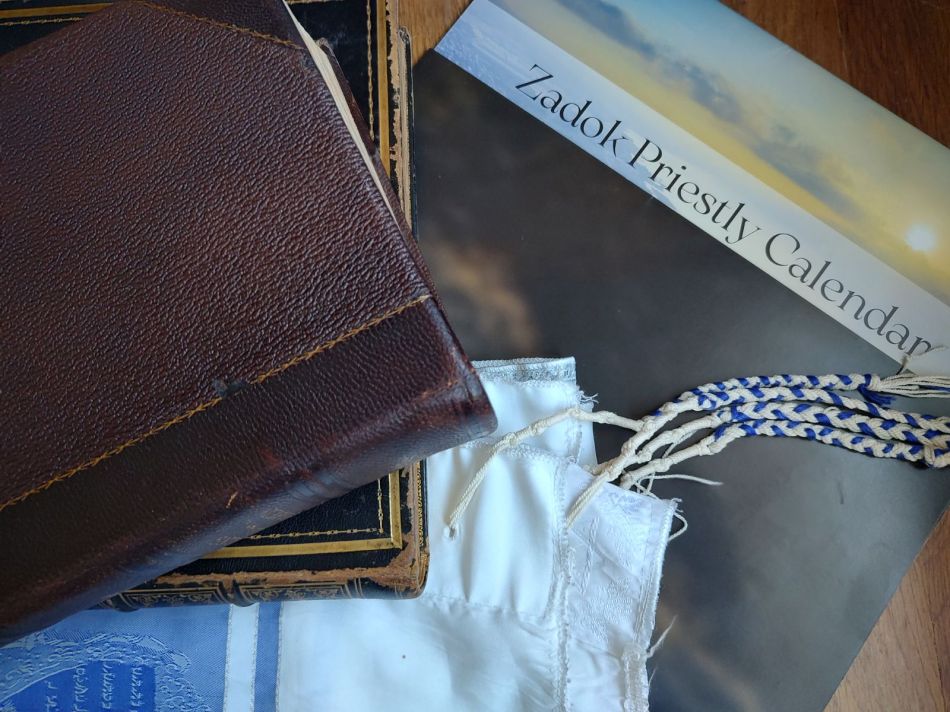
If you are keeping the Lunisolar Hebrew calendar in which each month starts with a new moon and a 13th month is sometimes added, I applaud your desire and commitment. I have kept and promoted this calendar for nearly 20 years.
In 2024, I faced confusion with the calendar. Some believers and congregations added a 13th month to accommodate the ripening of the barley in Israel, some did not.
That put Messianic congregations a month apart in their feast observances. Also, the actual sighting of the first sliver of the new moon (which determines when a new month starts) did not line up with what was calculated on the calendar I was using, which further threw off the dates of the feasts and rosh chodesh (head of the month) observances.
So, I redoubled my efforts. I researched all of my new moon dates with a third party. I looked into the ripening of the barley. I re-read the Torah’s instructions. But this additional information only served to raise more questions for me. Did Yehovah, the creator of the universe, whose ways are perfect, really intend for us to “correct” his calendar with an extra month every 2-3 years? Which barley field in Israel are we to be watching? What if it’s a dark night and we cannot see the sliver of the moon?
If Yehovah has commanded his people from all time to observe his holy days on their very specific dates, would he not provide a way for everyone to know when those dates are – whether inside or outside of Israel, with a righteous or wicked high priest, with a clear or cloudy sky, and with or without Google? This brought me back to the most basic question:
Why keep a Biblical calendar?
Why does Yehovah instruct us to blow the trumpet over our offerings at the beginning of our months (Num. 10:10)? The answer is simple: So that we know when the first and seventh months are. All of Yehovah’s commanded feast dates are in the first and seventh months. These are paramount on his timeline – past, present and future. I believe the primary reason to track the months is to be able to calculate when the feast dates are going to occur and put them on our calendar, in our plans and in our hearts, as they are in Yehovah’s. Even creation was designed with them in mind:
Genesis 1:14, “And God said, ‘Let there be lights in the expanse of the heavens to separate the day from the night. And let them be for signs and for seasons, and for days and years,’”
The word translated “seasons” here is actually the Hebrew word Mo-edim (Strong’s #H4150), appointed times – feasts, festivals, gatherings.
But the benefits of keeping a Biblical calendar go beyond that, to include revelation into the rhythm and themes of Yehovah through the year and in our lives. I believe these themes continue for us today. As well, man has added other dates to the Biblical calendar to commemorate notable events and alert us to things to come (Hanukkah, Purim, The Three Weeks of Sorrow, etc.)
But how am I to reconcile these questions and issues I’m finding, so that I can make sure I’m aligning as closely to Yehovah’s appointed times as possible?
The Zadok Priestly Calendar
I sought the Lord during the year to determine how to move forward in the coming year. That’s when he brought to my awareness the Zadok Priestly Calendar. My Pastors brought it up to me and we embarked on a fact finding mission. Other Torah teachers we respect, such as Monte Judah (Lion & Lamb Ministries), Eddie Chumney (Hebraic Heritage Ministries) and others, were endorsing the Zadok calendar, but there were many questions to be answered.
We looked at the basic differences between the two calendars:
| Main Differences | Lunisolar Hebrew Calendar | Zadok Priestly Calendar |
| Start of the Year | The day after the new moon can be seen after the barley is ripe in Israel (usually March or April) | The first Wednesday after the Vernal (Spring) Equinox, usually March 20-21 |
| Start of a Month | The day after the first sliver of each new moon can be seen. | Every 30 or 31 days (except the 12th month, which may have more) |
| Months Per Year | 12 or 13 depending on the barley | 12 |
| Days Per Year | 353 – 385 depending on the barley | 364 |
| Seasonal Markers | Not referenced | Used to track months and feasts |
| Dates Determined | By observing the ripening of the barley and the new moon | By calculating from the Vernal (Spring) Equinox, no observance required |
| Feast Dates | Occur on different days based on the Barley and the moon (i.e. Passover on the 14th day of the 1st month could occur on any day of the week.) | Occur on the same dates every year (i.e. Passover on the 14th day of the 1st month always occurs on a Tuesday) |
| Names of the Months | Based on Babylonian words and gods | Use the month number (Month 1, Month 2) |
While jarring at first, some of these differences started to clear up my frustrations with the Lunisolar Calendar. As we searched it out and sought the Lord, there were fascinating, revelatory and even miraculous findings that convinced us to make the switch to the Zadok Priestly Calendar.
Compelling Points to Consider
By no means understanding all of the aspects of it yet, the most convincing reasons I’ve found to change calendars were the following:
- This calendar has come to light due to the discovering and deciphering of the Dead Sea Scrolls. Among the scrolls, calendars were unearthed that were likely kept by the Zadok priests.
(The scrolls were confirmed by a leading Hebrew University archaeologist the very same day the UN voted to create a Jewish state in Mandatory Palestine – https://www.icej.org/blog/israels-national-rebirth-and-the-dead-sea-scrolls/.
What is Yehovah up to?)
- The Zadok priests were a priestly line from the time of David. It is believed that the Essenes of Qumran, where the scrolls were discovered, were the remnant of the Zadok priestly line after the Babylonian exile. Zadok priests are also chosen by Yehovah out of all the other Levitical priests to serve in his temple (Ezekiel 44-45, see 44:15).
- The calendars found are documented in many books about the Dead Sea Scrolls and much of it matches with Enoch’s writings from the pre-flood era about his understanding of the sun, moon and seasons.
- The Torah does not explain all there is to know about how to calculate the Biblical calendar. This is why there is confusion and various iterations. The First Book of Enoch provides additional instruction (Chapters 72-82). However, it is still not reconcilable as a definitive guide. But, when you combine the Torah, The First Book of Enoch and the Dead Sea Scrolls, there is now evidence and guidance for calculating everything in this Zadok calendar.
- For the Lunisolar Hebrew Calendar, I learned that there was no evidence or instruction for:
- Starting each month on a new moon
- Starting the new year when the barley is ripe
- Adding a 13th month every 2-3 years
These are all foundations of the Hebrew calendar and yet there is no place in the Torah or any of the writings that supports them.
- There is no mention of a new moon in the Hebrew Bible. The term “Rosh Codesh” is often translated to “new moon” in English Bibles. “Rosh” (H7218) means beginning or head, but “Codesh” (H2320) means month, not the actual moon. The word for moon is “yereach” (H3394). It is used 27 times in the Bible, but never in connection with the appointed times of Yehovah.
- When I saw the simplicity of the concept, yet how all-encompassing it is of the elements of time, I recognized Yehovah’s handiwork. Only He could come up with something anyone could calculate and understand, and also have it continue to reveal more the more you learn about it. It perfectly aligns with the sun, moon, stars and seasons – just as is stated in Genesis 1:14-19, pointing us easily to his appointed times, which is stated as the reason for creating them.
Some examples of this include:
- Exact Sabbath dates repeat every three months, which can only happen on a 364-day year.
- New months always start on Wednesday, then Friday, then Sunday and repeat that pattern all year, every year, forever.
- Month one, the head of the year, always starts on a Wednesday, the fourth day of the week. This is because the sun, moon and stars were created on the fourth day of creation. This was the beginning of earthly time and nothing has changed, because Yehovah does not change.
- The calendar is broken into the four seasons, and a new month begins on the Wednesday within a week of each of the four seasonal markers: Vernal Equinox, Autumnal Equinox, Summer Solstice, Winter Solstice.
- Each new season has exactly 91 days, 13 weeks.
- View a sample calendar of Hebrew months to see the simplicity.
These repeating patterns make it possible for anyone to create their own calendar. If you know when the Spring (Vernal) Equinox is, you can figure out the rest. This is how we are all responsible to keep Yehovah’s appointed dates, because anyone can calculate them. You don’t need a priest, you don’t need to observe anything, and you don’t need Google to find the moon’s cycle or check on Israel’s barley crop. Yehovah would not hold us responsible for specific dates if we had no way of knowing when that date was.
Always Aligning with Yehovah’s Revelation
I had to grapple with the fact that I have not known this until now. Was everything else that I learned and that I was teaching wrong? When I was a Christian, I was doing the best I could do with the information I had. And using that path, Yehovah led me to a Messianic understanding, so I could align closer with his heart and his ways. Following the Lunisolar Hebrew Calendar increased my desire to keep the Biblical calendar and is what Yehovah used to lead me to the Zadok Priestly Calendar.
This is our evolution as children of the living God and in our journey of coming out of Babylon to align closer and closer with the revelation he gives us for his ways. As we are malleable wineskins that will not burst with new wine, our understanding will continue to evolve. We will continue to seek Yehovah for more revelation of him and his ways and re-align with what he reveals.
Links for More Study
I hope you will look into this for yourself and seek the Lord for his instruction, as we wait for the restoration of all things and the law going forth from Zion.
- Remnant House Ministries “The Holy Zadok Calendar In The Dead Sea Scrolls – Part 1”
- Remnant House Ministries “The Holy Zadok Calendar In The Dead Sea Scrolls – Part 2”
- An Overview from Lion & Lamb Ministries
- An Overview from Natzarim Yahshua Family Fellowship
- Rachel Elior’s Guest Lecture at the University of Chicago School of Divinity
- Rachel Elior’s “Who Wrote the Dead Sea Scrolls”
- Returningtothegarden.com books, studies and dates
- “Signs of the Times” Video Series (6) discussion between Avi ben Mordechai and Eddie Chumney
Links to Purchase, View, Download or Print a Zadok Priestly Calendar
2024-2025
- For purchase from Lion & Lamb Ministries, March 2024 – March 2025
- For viewing or free download from Remnant House
- For viewing or free download from Natzarim Yahshua Family Fellowship
2025-2026
- For purchase from Returningtothegarden.com



 Messianic Sabbath
What you have just written makes 100% sense to me. The Lord has led me to the Zadok Calendar as the truth. But there are variations of it posted on the internet, so which Zadok Calendar, well just follow the truth…
The bible is the only source. 12 months in a year, spring equinox, 30 days a month etc… The new year will always fall on Wednesday (Tuesday eve to Wednesday eve). According to the bible, Passover starts 14 days after the new year. When was Jesus crucified? On Thursday morning after Passover dinner from Wednesday evening… proof is written by God for us all to see!
March 21, 2025 at 1:15 pm
1-13-24
@ Administrator
Thank you,
I will look into this.
Love, Walter
January 13, 2025 at 12:48 pm