Our Calling This Shemitah Year, Part 1: The 5 Primary Events of Wrath
 In 2014, the Feast of Trumpets kicked off the Shemitah year. Nine days later was the Day of Atonement (Yom Kippur), and just three days after that the second of four blood moons occurred. The Feast of Trumpets, The Day of Atonement, the Shemitah year, the tetrad of blood moons – what do all these have to do with each other? What do they have to do with us? And what can we do to participate in God’s plan? (more…)
Our Calling This Shemitah Year, Part 2: Blood Moons, the Feasts and Our Role
In Part 1, we looked at the progressive revelation of God’s wrath, including the five primary acts of God’s wrath, the five elements common to each, and the three milestones marking where we are in the timeline. With that in mind, I want to overlay one more aspect that brings us to our current day.
The Shemitah & Blood Moons
Preparing for Yom Kippur: 40 Days of Repentance, Part 1
 How would you characterize the month of August? How about September? Or January? Just like the Gregorian calendar in which each month reminds us of the season and a mood, the Hebrew sages have determined the spiritual seasons of the year.
The Hebrew month of Elul is considered the start of the “Season of Repentance.” This season extends 40 days, from Elul 1 to Tishrei 10, the Day of Atonement (Yom Kippur). (more…)
Preparing for Yom Kippur: 40 Days of Repentance, Part 2
In Part 1, we looked at the Hebrew understanding of the month of Elul, which begins 40 days before Yom Kippur (The Day of Atonement). From the days of the Israelites in the wilderness, this period has emerged as a Season of Repentance, specifically repentance from idolatry, and originally the idolatrous Golden Calf.
For us it may not be a statue, figurine or carved image, but idolatry can take many forms. Repentance is an ongoing process of discovery of sin in our lives and realignment with God’s ways. In my own journey I’ve found four places where idolatry can hide and have watched God realign my life as I walk through each one. We’ve discussed the first two: discontentment and following my own plans. Let’s continue with the third:
Fear (more…)
The Day of Atonement: Yeshua Already Paid for That
 “…and forgive us our debts as we forgive those who trespass against us.” (Matt. 6:12)
…”Forgive, and you will be forgiven.” (Luke 6:37)
Forgiveness: Relinquishing our desire to punish another for their offenses. (Dr. Jerry Cook)
Easy to understand, hard to apply. But The Day of Atonement (Yom Kippur in Hebrew) is all about forgiveness – God’s forgiveness of man, and man’s forgiveness of others. Yom Kippur (literally translated the Day of Atonements) is the sixth in the seven Biblical Feasts. It commemorates God’s annual forgiveness of the Israelites as a nation and God’s forgiveness of all through Yeshua’s death. Likewise, it’s a time when we are to forgive others. (more…)
What Are You Making God?
 I lifted my most pressing heart’s desire to God, as I make a habit of doing on the Sabbath. Later that day, He began answering me, as He often does on the Sabbath.
A new opportunity arose from someone in my congregation, and I was asked to participate. Wow, I’d never thought of that idea, I didn’t even know we had those resources. It was an obvious God-incidence in answer to my prayer. I was excited about the prospect and what it could lead to.
What Did Jesus Say About the Sabbath?
 Often we hear that Jesus taught against the Sabbath as a day of rest. After all, he healed on the Sabbath, he defended his disciples for picking grain on the Sabbath. Every time the Pharisees challenged him about the rules of the Sabbath, he set them straight that “The Sabbath is made for man, not man for the Sabbath.” (Mark 2:27)
I heard those teachings; I read the Pharisees’ criticism of his actions on the Sabbath and Jesus’ responses defending himself and his disciples. I was convinced that the Sabbath and all its rules had been done away with when Jesus came and taught us the New Covenant.
Then I read the original instructions for the Sabbath in the “Old Testament.” (more…)
Purim – Partnering with God to Bring His Will
“As a Christian, serious about living out Christ’s intention for me, I view life as a series of opportunities to respond to and maximize… to recognize opportunities – either immediate or in the future – and prepare for, or respond well to them.” Dr. Jerry Cook
This summarizes our partnership with God in bringing his will. This is exactly what Esther and Mordecai did when the Jews were threatened with extermination by the Persians, as recorded in the Book of Esther – the story commemorated on the festival of Purim. (more…)
Purim – The Story of Mordecai
 Esther – Queen of Persia, intercessor for the Jews before the King, and the one for whom the book of Esther is written. Understandably, as the heroine of the story, most discussions of the book are meant to inspire people to emulate her. But how many people are going to get the chance to be a queen, and in a position to intercede for their people in front of a king? Re-reading the story this year, I realized Mordecai’s role in the whole affair is probably a more realistic picture of what people in any position could aspire to. (more…)
Hanukkah? Chanukah? And Why Does the Date Keep Changing?
 Hanukkah — or Chanukah as it’s sometimes spelled, typically falls sometime in December. I had heard of it, but didn’t actually know what it celebrated. So one day I decided to look into it. If you’re at that point, I can save you some time.
It turns out, it’s really not the Jewish version of Christmas. It’s not even the most important Jewish holiday. It just happens to usually fall between America’s biggest holidays — Thanksgiving and Christmas — so we end up throwing it in with the majors. Not to say that what’s celebrated is not a big deal. Here’s what I found out… (more…)
As Hanukkah’s Candles, We Light up the Darkness
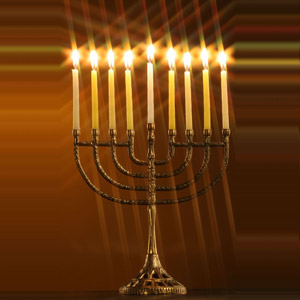 “Arise, shine, for your light has come, and the glory of the Lord rises upon you.” Isaiah 60:1
I find no evidence that this passage was originally about Hanukkah. It’s meant as a prophecy about Israel in the Millennial Age. But as I was contemplating the Hanukkah candles, this verse came to mind.
Then as I read verses 2-3, I realized how much this really parallels the idea of the Hanukkah candles:
“See, darkness covers the earth and thick darkness is over the peoples, but the Lord rises upon you and his glory appears over you. Nations will come to your light, and kings to the brightness of your dawn.” Isaiah 60:2-3
I decided to take a closer look at this passage and some of the Hanukkah themes that it contains. (more…)
As Hanukkah’s Candles, You are the Light of the World
 In my last post about Hanukkah, I explored how the Hanukkah candles symbolize our light in the world and how we partner with God to bring light to the darkness. Our focus was on Isaiah 60:1-3. As I continued my research into the Hebrew words used in Isaiah 60:1, it gave me a deeper understanding into my true power as a light in the world.
Isaiah 60:1 reads, “Arise, shine; For your light has come! And the glory of the LORD is risen upon you.” In a literal Hebrew translation, this would read: “Arise-you! light-up-you! That he-came light-of you and glory-of Yahweh on you he-is-radiant.”
The Hebrew seemed to be a much stronger statement, especially the idea that Yahweh is radiant upon us. (more…)
My Song of Solomon Love Song
As I looked out my window and reflected on all the beautiful things God had made and how much joy they bring me, I wished I could be as pleasing to Him as those are to me. I sang a song: (more…)
Why celebrate all these Jewish holidays? Haven’t those been done away with?
There are seven Feasts or Holy Days commanded in the Bible – four in the Spring, and three in the Fall. It’s true, Jews had been observing these Feasts for 1,400 years before Yeshua’s birth. But what if Yehovah set those dates as days He intends to fulfill specific prophecies in Yeshua’s lifetime and His second coming? Wouldn’t you want to know which dates those were? Let’s recount what happened on the Spring Feast dates during Yeshua’s lifetime. (more…)
Thank Goodness for The Feast of Tabernacles!
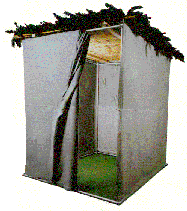 A pandemic, economic uncertainty, fear, division – the headlines bombard us. The low level hum of a looming turmoil grows louder. Thank goodness for The Feast of Tabernacles!
The Feast of Tabernacles, called Sukkot in Hebrew, is the seventh and last Feast in God’s holy days. It looks back to God’s unlimited provision for the Israelites as they sojourned 40 years in the wilderness. During the seven days of Sukkot, we spend time in our flimsy, homemade shelters to remind us of our complete dependence on God. Sukkot also looks forward to the Millennial Age where we will “tabernacle” with Yeshua eternally.
But there’s an often overlooked aspect to this Feast. (more…)
The Feasts of the Lord: Going Through the Motions
Passover, Feast of Unleavened Bread, Feast of First Fruits, Pentecost, Feast of Trumpets, Day of Atonement, Feast of Tabernacles – lots of Feasts, each with different instructions for observing them. Sometimes when we’re just starting out observing the Feasts, or approach a new season of Feasts, we can easily think of all the instructions and do’s and don’ts, and forget the richness of each Feast. It can feel – and in fact become – like we’re just going through the motions.
I can imagine that’s how the Hebrews must have felt when they heard the instructions for the first time as well. Exodus 12 is 50 verses full of instructions for Passover and the Feast of Unleavened Bread. And the instructions are not exactly intuitive or logical. What were they to make of killing a lamb and smearing its blood on their door frames? Had that ever saved them from death before? Was this a common practice? And what’s so bad about leavened bread? What does that have to do with saving their firstborns? (more…)
Preparing to Enter Our Promised Land – Part 2
 In Numbers 1-2 God appoints leaders from each tribe of the Israelites, counts the men for military battle and organizes them as to how they are to camp and move. By Numbers 10 they are moving toward the Promised Land. These are our bookends in this study. Everything within this 20-day period can be considered the last minute instructions before the Israelites can move forward.
In Part 1, we referenced Hebrews 3-4, in which Paul points out,
“it still remains for some to enter that rest, and since those who formerly had the good news proclaimed to them did not go in because of their disobedience, God again set a certain day, calling it ‘Today.’ ” … “There remains, then, a Sabbath-rest for the people of God;”
The last minute preparations in how to enter our Sabbath rest in these last days are the same for us as they were for the Israelites in Numbers 1-10. These are our instructions for what is required in order for God to fulfill His promises to us. (more…)
Preparing to Enter Our Promised Land – Part 1
Numbers 1 begins the culmination of God’s main purpose for the Exodus: entering the Promised Land. Hebrews 4 tells us we are still headed for the Promised Land, calling it our Sabbath rest. Numbers 1-14 are the last few weeks before His grand plan is finally realized. The first 10 chapters provide an outline of how to prepare to enter the Land – for the Israelites, and for us today. These are the last few instructions for following God’s presence into our land of blessing and abundance. (more…)
The Spring Feasts: A Time to Remember, A Time to Anticipate
 Typically we think of the Spring Feasts as a time to remember – the Exodus and Yeshua’s death on Passover, his resurrection on the Feast of Firstfruits, the giving of the Torah and the Holy Spirit on Pentecost.
Then, we think of the Fall Feasts as a time to anticipate – Yeshua’s return on the Feast of Trumpets, the Lamb’s Book of Life opening on the Day of Atonement and tabernacling with Yeshua on the Feast of Tabernacles.
However, I found there’s also more to anticipate in the Spring Feasts. There’s more to come. The remembering helps us understand what to anticipate in the future. (more…)
Why Count the Omer? Part 2: Nine Days of Prayer
 In Leviticus 23:15 God instructs us to count the seven weeks (49 days) that occur before the Day of Pentecost (the 50th day) also called the Festival of Weeks and Shavuot in Hebrew. But counting days with no explanation? Why would this be important to God and to us?
For the Israelites, it pertained mainly to their harvest cycle and offerings to be presented. For us living after the time of Yeshua, and the giving of the Holy Spirit to the disciples, we can see the spiritual implications of this count. We know that on the 50th day after Yeshua’s resurrection, something unimaginably wonderful happened: The pouring out of the Holy Spirit not only on the disciples, but on all those who come to faith in Yeshua as the Messiah! The implications of that day reverberate even stronger in these last of the last days. The 50th day is one I want to be prepared for every year. (more…)
Why Count the Omer? Part 3: God’s Spirit Poured Out
This 3-part blog series focuses on the Lord’s instruction in Leviticus 23:15 to count the seven weeks (49 days) that occur before the Day of Pentecost (the 50th day) also called the Festival of Weeks and Shavuot in Hebrew. For the Israelites, the count was about the harvest, thus the word “omer” which was a unit of measure used to count and track grain harvests. Yeshua taught us the spiritual meaning of “harvest” as those ready to receive the good news of the Messiah (Matt 9:37). That’s what the third phase of counting the omer is about.
In Parts 1 and 2, I laid out a three-phase structure for the 49-day count:
- The first 40 days
- Days 41-49
- The 50th day
The first two phases prepare us for what’s about to happen on the 50th day and beyond. (more…)
Passover and Easter: What are You Celebrating?
 Passover and Easter usually occur close together on the calendar, and presumably both commemorate the same event. Are they the same or what’s the difference? Up until a few years ago, I assumed Passover was Jewish and Easter was Christian. But what I found surprised me. (more…)
God’s Blessing & Provision: All Who Call on the Name of the Lord Will be Saved
 In the posts leading up to this, I discussed the balance between stewarding our resources for the difficult times ahead, while maintaining complete dependency on Yehovah’s provision during those times. In Part 2, we looked at Joseph as a type of Messiah who foreshadows how Yehovah will provide for us during times of tribulation. But all of this assumes one very important requirement on our part: Calling on the name of the Lord.
This is certainly not a new concept. It might seem obvious to most. But I hadn’t seen the full meaning of this principle until I put it into the perspective of tribulation. What had been a wonderful spiritual understanding now took on literal significance. (more…)
The Blessing of the 10 Commandments: A Case in Point
In an earlier post, we reviewed the lifestyle of following the 10 Commandments and the blessings it produces based on Deuteronomy 26:16-19. But God’s blessings go beyond human logic. It’s not only that if you do this, then that will happen. While that is certainly true in the natural realm, when we pursue God’s commands, the spiritual results are compounded beyond what we can imagine. (more…)


 Messianic Sabbath